+91 9818411155 [email protected]


SaleNew


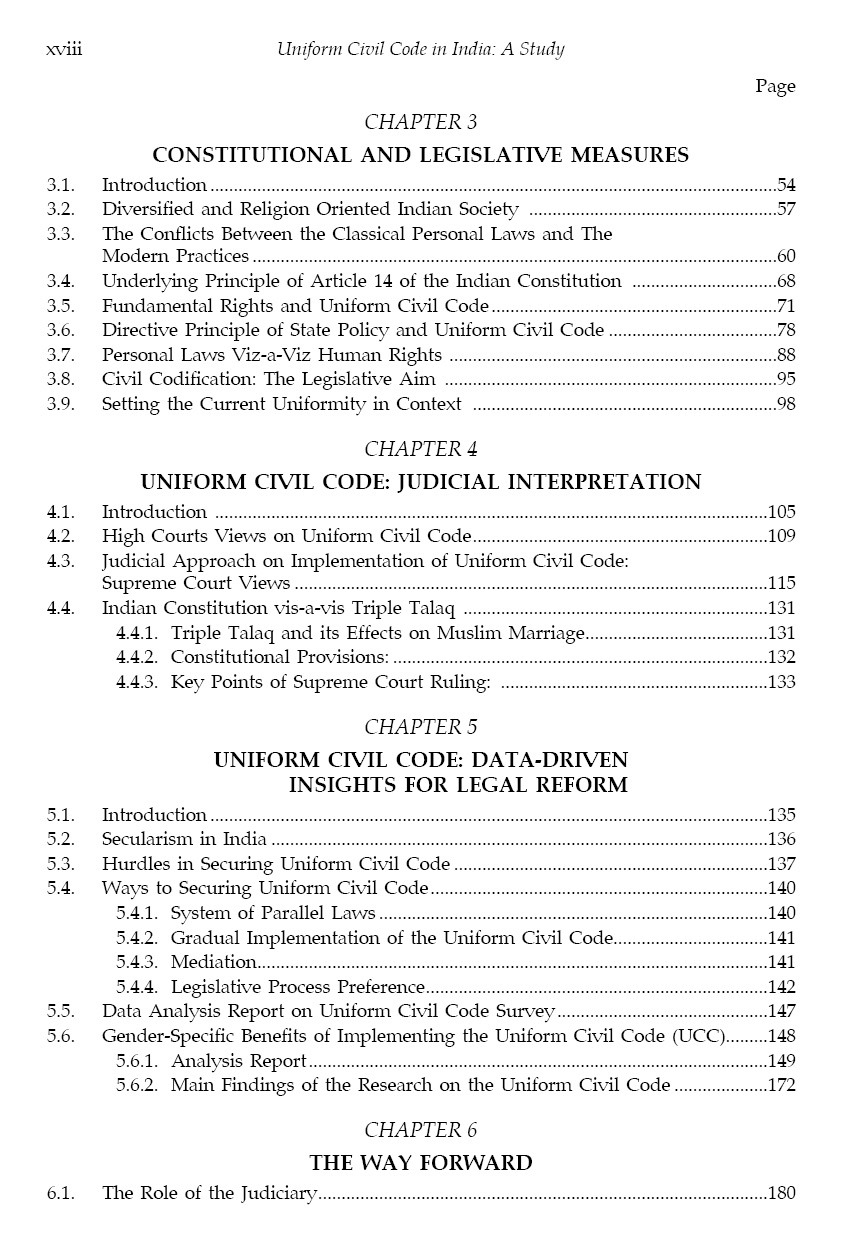
Uniform Civil Code in India a Study
Original price was: ₹495.₹425Current price is: ₹425.
he term Uniform Civil Code (UCC) is being discussed in India today. The term UCC combines three components equality or uniform, civil and code. The Uniform Civil Code (UCC) comprises a unified set of laws governing personal matters such as marriage, divorce, inheritance and succession, which applies to all citizens of India irrespective of their religious background. It proceeds through the historical evolution of these terms and their implications in the context of Article 44 of the Indian Constitution, which prominently emphasizes the efforts of the State to implement the UCC. The origin of UCC in India is colonial. Its importance is emphasized in the post-independence period of India, particularly the efforts to codify Hindu law are examined. The main objective of the ongoing debate in India on the issue of UCC is the efforts of the States towards implementing the UCC. The study of UCC mainly emphasizes the constitutional directive principles and the obligation of the State to implement the UCC.
Description
ABOUT THE BOOK
The term Uniform Civil Code (UCC) is being discussed in India today. The term UCC combines three components equality or uniform, civil and code. The Uniform Civil Code (UCC) comprises a unified set of laws governing personal matters such as marriage, divorce, inheritance and succession, which applies to all citizens of India irrespective of their religious background. It proceeds through the historical evolution of these terms and their implications in the context of Article 44 of the Indian Constitution, which prominently emphasizes the efforts of the State to implement the UCC. The origin of UCC in India is colonial. Its importance is emphasized in the post-independence period of India, particularly the efforts to codify Hindu law are examined. The main objective of the ongoing debate in India on the issue of UCC is the efforts of the States towards implementing the UCC. The study of UCC mainly emphasizes the constitutional directive principles and the obligation of the State to implement the UCC.
The book also analyses key legal cases from Shah Bano to Shayara Bano that have shaped and pushed the debate on the Uniform Civil Code. Article 162 of the Indian Constitution grants executive power to the State, allowing the Legislature to legislate on certain matters. This power is further supported by Entry 5 of the Concurrent List in the Seventh Schedule, which specifically addresses various aspects including marriage, divorce, adoption and succession, allowing states to legislate related to personal laws. Consequently, the establishment of a committee by the state government of Pushkar Singh Dhami of Uttarakhand to implement a Uniform Civil Code in its jurisdiction is in line with constitutional principles and legislative jurisdiction. In 2024, the Uttarakhand government led by Pushkar Singh Dhami demonstrated its commitment to establishing a comprehensive legal framework addressing personal matters including marriage, divorce, live-in relationships and succession, regardless of religious affiliation. The Uniform Civil Code (UCC) in India has been a contentious issue, reflecting diverse viewpoints, interests and concerns. It analyses the legal, political, social and cultural challenges involved in implementing comprehensive legal reforms in a diverse and pluralistic society like India. It also discusses strategies for consensus building and stakeholder engagement, highlighting the importance of inclusive dialogue, education, consultation processes and political leadership in advancing the cause of legal reform. It discusses ongoing initiatives, recent developments and future prospects for advancing the UCC agenda in India. It highlights the socio-legal aspects of the UCC and examines its implications on matters such as marriage, divorce, inheritance and adoption. It also evaluates concerns related to freedom of religion, secularism and the potential impact on diverse communities. Drawing insights from global experiences, including the example of Goa’s existing Uniform Civil Code, it explores the feasibility and desirability of the UCC in a multifaceted Indian society. In conclusion, it advocates a comprehensive socio-legal study to assess the feasibility and desirability of a Uniform Civil Code in contemporary India. It also proposes a Draft Bill on Uniform Civil Code for the implementation in India. It underlines the need for a balanced law that constantly strives to reconcile diverse traditions while upholding constitutional principles, promoting national integration and ensuring equal rights for all citizens.
You must be logged in to post a review.





Reviews
There are no reviews yet.